Lateral powers do certainly not announce on their own along with anticipation. They turn up as a slow-moving bow in a basement wall structure, an understated design on top of a bordered bay, or a hairline split that prolongs after a heavy rainfall. With time, those tiny signs and symptoms amount to use problems as well as, in the most awful situations, a reduction of building reliability. Tieback anchors and their helical cousins handle that complication at the resource. They involve stable dirt or rock outside the failure area as well as take a structure back in to harmony. When developed as well as mounted appropriately, they are peaceful artists that extend the life of preserving systems, basement walls, and whole entire buildings.
I have actually enjoyed tiebacks saving growing old industrial homes where road developments drove brand new lots right into aged foundations, and also where digging for a surrounding job left a wall surface unbraced. The usual thread in prosperous results was certainly not a certain product but good judgment in ground analysis, mindful load screening, and reasonable requirements concerning rigidity and movement.
Where sidewise security fails
Commercial frameworks face sidewise bunches from earth tension, additional charge from adjoining sidewalks and also traffic, hydrostatic pressure, wind on below-grade define partly open garages, and from time to time seismic shaking. The most usual perpetrators are uneven backfill and also groundwater. On a five-story accommodation I noted in the Midwest, the reduced auto parking level wall structure had actually been put versus a lumpy backfill positioned as well quickly after the wall surface remedied. Small straight gaps showed up at the reduced third of the wall within a year. Documents indicated overstress from sidewise pressure and inadequate connection of the wall to the piece diaphragm. The repair service turned on helical tieback anchor setup incorporated along with crack injection and a much better water drainage pathway, certainly not a thicker wall.
The physics is straightforward. Ground uses side stress that raises with deepness. If the standing up to body, commonly a wall dealt with at base as well as limited at the top, can certainly not respond to the second, the wall structure deflects. That curvature redistributes stress as well as may relieve requirement rather, once cracks develop as well as water discovers a course, destruction accelerates. Tieback anchors step in by carrying flexible lots right into stronger product a greater distance from the wall structure, which decreases bending in the wall structure and limits deflection.
What a tieback support does
A tieback anchor is actually a strain aspect installed with a construct, usually at a downward slant, to transfer weight from the construct to the ground or even stone mass behind the active block. The support possesses three crucial parts: the bond zone installed in qualified strata, a free size that extends elastically to allow tensioning, as well as a head that attaches to the construct. When preloaded, the support creates a maintaining power that counters active planet tension. The support performs certainly not remove stress, it bypasses the prone wall micro pile system installation through linking it to a much more trusted lots path in the ground.
Helical tieback anchors utilize coils welded to a core shaft to create capability as they are oppressed in to the soil. The setup torque correlates to capacity, which provides urgent reviews. Grouted tiebacks develop ability by bonding to the dirt by means of cementitious grout. Both units possess a task. Helical anchors excel in rough or natural dirts where torque could be created and also propelled promptly, and they shine when accessibility and also vibration restrictions are tough. Grouted tiebacks typically make good sense in sands and gravels at depth or when a rock connect area is needed.
When helical tiebacks are actually the best tool
On infill sites with poor gain access to, helical tieback anchor installment could be conducted along with fairly small, low-clearance equipment. A skilled team may set up supports coming from inside a structure without clearing away pieces. At a warehouse in New Jacket, our company stabilized a 140-foot extent of accepted structure wall structure without interrupting procedures. Supports were installed coming from the interior, angled beneath pallet racks, and also tensioned against brand-new waler beam of lights at the wall structure face. The helical tiebacks joined a border drain reduced hydrostatic stress and also offered the wall structure a reliable counterforce.
Helical supports additionally work effectively when the timetable can easily not fit grout remedy opportunities. The connection between torque and ability allows evidence filling the same time. For urgent commercial foundation stabilization, that accelerate matters. If a wall is actually relocating and you need to have to stop development prior to the following rainfall, helical tiebacks may be actually the difference between a repair service and also a rebuild.
Edge cases exist. Heavy rocks with cobbles can deflect helices, leading to misaligned alignment or rejection. During that instance, changing to a punched micropile-style tieback with grout makes sense. Organic soils as well as dumping ground clutter are actually another warning. You require to bypass undependable levels to find a competent connection area, occasionally at better spans than originally prepared. That is where preconstruction examination anchors earn their keep.
How tiebacks interplay along with deep groundwork systems
Lateral stabilization is actually hardly standalone. It ties right into various other structure strategies. A modern-day business property might combine commercial helical pile installation for vertical assistance along with helical tieback anchors for side stability. I have also seen micropiles hold gravitation tons while helical anchors took care of reversing at a tall maintaining wall surface. Micropiles and also protection stacks are exceptional for vertical tons transactions via bad grounds to rock or even thick strata, but in pure stress side to side they have limits unless battered or even secured with a strong connection zone.
Consider a retail package store improved gentle clays over weathered shale. The pillars were supported by micropiles, 2 every pillar, put up to stone. The back filling dock demanded a 16-foot decrease with a soldier heap wall. The concept utilized helical tieback anchors for the wall, laterally bandaging the device without transmitting large loads back in to the piece. That separation of duties maintained the design well-maintained, and potential slab repair services would certainly not endanger lateral stability. Micropile installation and tieback anchors, when coordinated, permit modular repair work and also maintenance.
Commercial resistance pile installation, in some cases named push boat docks, can easily additionally find a location. While resistance heaps beam in structural foundation repair for resolution, they are certainly not generally utilized as main sidewise elements unless combined with walers and preparing. In deep foundation repair, I check out protection piles for upright modification and helical tiebacks or grouted anchors for wall surface Commercial Helical Pile Installation restraint. Blending systems is not duplication, it is department of labor.
Diagnosing side trouble just before deciding on anchors
Foundations that need tiebacks often show very early indicators: parallel splits near mid-height, angled fractures at sections, protruding of brickwork devices, or even spalling where rebar has actually rusted coming from water infiltration. Before any commercial foundation repair, map the crack style as well as take a handful of altitude tries along with a laser device across the wall structure. If the curvature is concentrated at the center of a board, a tieback design with closer spacing there may be actually warranted. If the top of wall was aimed as a birth control link but the support bolts are actually worn away or even skipping, look at improving the relationship in tandem with supports. Foundation crack repair with epoxy injection has the greatest worth after movement quits, not before.
For below-grade walls, groundwater control distinguishes effectiveness. I have pulled on perfectly set up tiebacks that performed their project while water continued to push via chilly joints as well as fractures. The wall stayed upright, but the space kept moist and also unhealthful. French drains pipes, weeps, as well as positive water drainage off of the wall structure lessen the line-of-defense work that tiebacks are pushed to carry out. If hydrostatic tension is high, plan for drains pipes and also septic tank capability in the same breathing spell as anchors.
Design considerations that create or breach performance
Tieback design rests on dependable dirt records and reasonable tons designs. A general rule: if you are counting on thought ground guidelines from a paper throughout community, you have opened the door to callbacks. Pull a handful of borings or even cone infiltration examinations along the wall structure positioning. Look for the sharpness to stable component and the existence of coatings that might slip under sustained bunch. Silts that appeal company on day one may loosen up under long-lasting stress. When utilizing helical anchors, keep track of installation twist every foot to identify unsteady seams.
Anchor geometry is actually much more than a diagram. The slant of setup, generally 10 to 25 levels below horizontal, affects pullout performance as well as the threat of facing energies. The connection zone size, whether grouted or determined by helical plate pile, need to completely build capability. In helical tiebacks, the lead arrangement issues: various coils spaced three dimensions apart on bum rap reduce group communication and improve payload circulation. For grouted tiebacks, opening dimension and also grout strength determine the connection capability, but therefore does boring method. Excessively aggressive drilling may asperse the borehole in clay-baseds and also minimize bond.
Load screening is non-negotiable. I favor a course that includes at the very least one functionality exam to breakdown or 1.5 times concept load, and also proof tests on creation supports to 1.25 opportunities style load. Keep a certain eye on creep under sustained tons. An easy requirement, including less than 1/8 inch movement in 10 minutes at optimal examination bunch, uses a peace of mind examination. If an anchor creeps, reassess the bond region or change to a various system.
Head details matter as high as the dirt. A tieback mind commonly bears upon a waler, often steel network or vast lip, that disperses the factor lots right into the wall surface. Poor waler match leads to squashing or stress attentions as well as can easily telegraph as brand new fractures. On a brick-infill wall structure, platters or even channels backed through grout may soften the interface. For cast-in-place concrete, coring a neat gap and also making use of a hot-dipped driven platter with a sunken nut always keeps servicing simple and also corrosion in check.
Installation facts on office jobs
Commercial helical tieback anchor installment is successful when workers respect the structure and the neighbors. Anchors installed from interior rooms need protection for appearances as well as dirt management. Fit-for-purpose tools, generally a torque motor placed on a mini-excavator or even skid-steer, requires sufficient space to develop torque without jumping off a row line. Where area is tight, hand-held gas devices can put in smaller-diameter helical anchors, however you trade speed and also capacity.
On a hospital retrofit, our installment window ran from 9 p.m. to 5 a.m. to prevent obstructing imaging suites. Our team sequenced supports so that no greater than pair of nearby anchors were actually set up at a time, avoiding brief loss of wall structure assistance. Pre-staging walers as well as components throughout the day minimized noise at night. The supports were actually tensioned considerably, 25 per-cent to seating, 75 per-cent to technique layout, at that point total load after a simple requirement inspection. That stepwise strategy stays clear of surprise loading a weak wall.
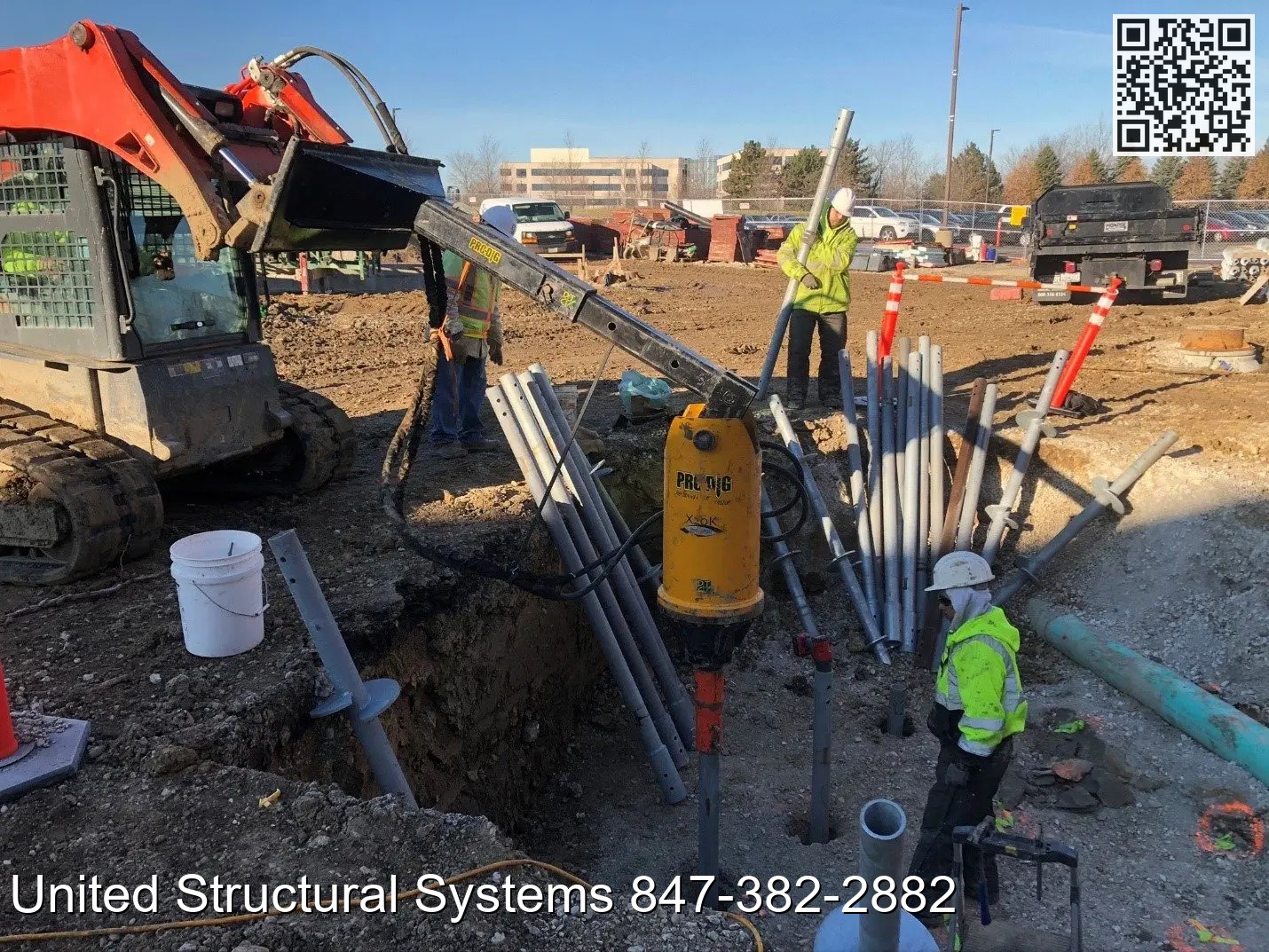
For grouted tiebacks, the internet site has to fit cement batching and spoil monitoring. In urban basements, that can be the restraint that nudges the choice toward helical anchors. Where grout is needed for style reasons, utilize a tremie cylinder to place cement from all-time low up as well as keep an eye on gains. Overdrilling without canvassing invites failure and also infected connect zones in smooth grounds. A tiny sheet right here becomes a repeating servicing call later.
Integrating tiebacks with various other repairs
Tiebacks are actually one component of structural foundation repair. They combine normally with deep foundation repair strategies used to deal with negotiation or bad bearing. An usual sequence in commercial foundation stabilization looks like this: assistance gravitational force tons along with helical piles or even micropiles, support side bunches with tieback anchors, then deal with wall surface health condition along with crack shot, patching, and also basement waterproofing. That order maintains positioning and minimizes additional damage throughout repair.
When a wall structure has cracked, foundation crack repair through epoxy treatment repairs structural continuity, but merely after motion is actually regulated. For damp walls, polyurethane crack treatment may cease leakages just before epoxy repairs. In stonework, carbon dioxide thread straps may share obligations along with tiebacks to restrict protruding in between supports. The key is actually acknowledging what each factor does well. Helical piles as well as resistance piles manage upright tons, micropiles take care of vertical lots where rock is centered or even gain access to is tight, helical tiebacks and also grouted anchors manage side tons, as well as surface repair work restore resilience as well as watertightness.
Costs, schedules, and what managers must expect
Owners ask two inquiries: How long will it take, and also the amount of will it set you back? The straightforward answer is actually varies along with contingencies. For a traditional business helical tieback venture on a 100-foot wall surface along with support spacing near 6 to 8 feets, expect 15 to twenty supports. Along with great get access to and also straightforward grounds, a team can easily set up and also pressure 6 to 10 helical tiebacks each day. That gives a 2 to four time installation home window plus mobilization and also prep. Grouted supports take longer because of drilling, covering, and grout treatment, often a full week or even more for comparable scope.
Costs rely on size, ability, accessibility, and screening requirements. Helical tieback pricing typically drops between mid 4 shapes to reduced 5 numbers every anchor for commercial settings, along with city jobs on the top end. Grouted tiebacks could be comparable per support however along with greater web site strategies costs. What proprietors may bank on: projects that acquire suitable inspection as well as screening have far fewer improvement orders. The least expensive anchor that neglects a creep test is certainly not a bargain.
Common downfalls and also how to stay clear of them
The most recurring slipup is actually alleviating tiebacks as an universal remedy without dealing with water and also drainage. A wall surface restricted by supports can still fall apart coming from entraped moisture, freeze-thaw cycles, as well as oxidation. An additional mistake is actually ignoring geometric constraints. Anchors can easily encounter utilities, occupant rooms, or future excavations. On a mixed-use task, an uncoordinated tieback trend hindered a support renter's organized escalator pit pair of years later on, as well as many anchors had to be abandoned and replaced.
Overreliance on magazine capabilities without site confirmation likewise causes difficulty. I always keep a record of installation torque, test loads, and actions for every anchor, not simply the examination anchors. Patterns emerge. If torque decreases all of a sudden in an area, probing further. It might be a buried trough, a filler pocket, or a soft seam. Conforming on the spot, along with the engineer engaged, always keeps the job on track.
Choosing between helical, resistance, as well as micropile systems
Engineers and contractors frequently encounter a three-way selection amongst helical piles, resistance stacks, and also micropiles, particularly when repair services ask for both vertical as well as sidewise upgrades.
- Helical heaps and helical anchors: Greatest when accessibility is limited, resonance must be very little, and prompt capability proof via torque is actually important. They fit a large range of dirts however struggle in very thick gravels along with cobbles or even boulders. Resistance piles: Tough choice for improving negotiation under existing footings where gas jacks may press heaps to rejection against the property. They are actually largely vertical elements, certainly not sidewise, unless arranged in struggling sets or even made use of with walers. Micropiles: Very versatile drilled-and-grouted factors that operate in strict areas and via blockages, with great performance to stone. They carry high lots yet involve more tools and cement dealing with than helical systems.
That fast comparison hides nuance. The quickest schedule is actually certainly not always the lowest risk. A website with changeable stuffing could argue for micropiles and grouted tiebacks even with the slower speed, due to the fact that boring and grouting may normalize the irregularity. However, in even clay-based with reliable twist connection, commercial helical pile installation together with helical tiebacks turnouts rate, reduced disturbance, as well as clean documentation.
A quick range story
A waterside storage facility in the Southeast possessed a maintaining wall surface that pitched 2 inches over 12 feets of elevation, pushing toward the inside. The wall backed up to a narrow street along with energies entwined through the right-of-way. Digging got out the table. Our team mapped energies, then specified a helical tieback pattern from the inside at 15 levels listed below parallel, targeting a sandy coating at 18 to 24 feet where examination probings presented excellent quality. Walers were rolled steel stations fastened along with sticky pins in to the wall. Our company put up 22 anchors over three nights, along with installation twists varying from 5,500 to 7,000 foot-pounds, associating to design loads of 25 to 35 kips. Evidence tests went properly, but pair of supports presented higher-than-expected motion at load. Soil logs showed a slim sand lense at that elevation. Our experts prolonged those 2 supports an extra 5 feet to record the deeper sand and retested. Activity fell to within requirements. 6 months after finalization, the wall surface continued to be stable, the fracture distances had actually not developed, as well as the interior room stayed completely dry after tropical storms because of a brand-new drainpipe as well as sump.
That venture enhanced a session I relearn on every task: the dirt informs you what it will approve, certainly not the various other method around.
Quality control that pays out off
Documentation is part of the job. For industrial projects, maintain a complete file: anchor I.d.s, areas, slants, durations, coil configurations or even connect spans, setup torques or cement amounts, examination bunches, and also motions. Photos of heads and also walers after tensioning help future groups know the fixing. Web site assessors as well as engineers must review the 1st numerous supports personally, after that at rational breakthroughs. These habits audio bureaucratic till the day a packing dock rooftop add-on work schedules surcharge onto a wall surface, and also the manager asks for the original abilities and factors of safety.
Corrosion protection deserves interest. Hot-dipped priming, epoxy coverings, double rust defense for grouted tiebacks with sheath, as well as effective specifying at heads extend service life. On seaside websites or where de-icing salts are present, do not skimp. Define the defense device very early therefore lead times do certainly not endanger schedules.
Bringing it together
Tieback anchors are actually certainly not elegant, however they are actually sincere. They make a measurable promise: use a well-known counterforce where the framework requires it very most. When joined brilliant water drainage, suitable deep foundation repair factors, and serious outlining, they return control to proprietors and resource supervisors that need to have buildings to operate day in day out. The very best results arise from controlled style, straightforward testing, and also staffs who recognize both the framework and the ground. If a wall surface is actually bowing or a basement is tackling water, the ideal mixture of helical tieback anchors, helical piles or even micropiles, and also uncomplicated foundation crack repair may transform a slow concern right into a secure, predictable asset.