Retaining walls that keep back office websites hardly acquire 2nd odds. The additional charge comes from vehicles, stacked containers, transformer pads, pedestrian online lots, also a future structure that was actually not part of the initial planning. When the ground wishes to move as well as the property manager really wants the parking lot handed over next month, tieback anchors become the quiet heroes responsible for the wall surface. Getting them right is less about a solitary formula and even more regarding judgment: field-verifiable capability, constructability in actual grounds, and a system that remains functional for decades.
What our experts suggest through a tieback on industrial sites
A tieback anchor is actually a stress element inserted in steady dirt or rock beyond the prospective breakdown surface of a maintained mass. It gets grouted, proof-tested, and secured off to supply a long-term horizontal reaction. In commercial job, the anchor frequently partners along with soldier shafts, sheet heaps, secant piles, cast-in-place wall structures, or even mechanically stabilized planet (MSE) doors when a tensing product line of supports is actually required at the top. The support carries the sidewise drive, the wall deals with flexing, and also the soil does the rest.
Three loved ones dominate this room:
- Helical tieback anchors along with screwed-in coil plates that bear in proficient dirt. They are actually rapid to mount, very easy to examination, and also excellent when resonance or spoils should be lessened. The same technology shows up in commercial helical pile installation for vertical loads. Grouted anchors, which include pressure-grouted hairs or even clubs. These mobilize bond along a grouted light bulb. Durable and also verified at scale, yet they prefer cautious exploration, blush, and also grouting standards. Micropiles made use of as tiebacks. While micropiles and also micropile installation are normally linked with vertical loads in deep foundation repair, a struggling micro pile can be specified as a tieback anchor when geometry or even installment restraints require it.
Selecting one of helical anchors, grouted tiebacks, or assaulted micropiles activates the dirt account, expected corrosion, gain access to limitations, sound and vibration constraints, ecological permitting, and also the schedule. In built-up areas, I often lean toward helical tiebacks for short-term as well as some long-term treatments due to the fact that torque-to-capacity connection is actually tough and creation is expected. If the preserved elevation is big, the groundwater is higher, or long free of charge spans are actually needed, grouted anchors generally win.
Start along with the planet pressure model
For business keeping structures between 12 and 35 feets, I begin along with an international model that carries out certainly not hide responsible for carte blanche "energetic state" expectations. I check at-rest, active, as well as limited-yield shapes because office wall surfaces may not disperse enough to completely mobilize energetic pressure. If the wall becomes part of a basement that have to remain functional and also plumb for architectural appearances, style closer to at-rest.
A common advancement resembles this: specify unit burden, abrasion angle, communication if existing, and also groundwater profile. Specify additional charge tons from visitor traffic, storage, or surrounding bases. For MSE or even soldier-pile wall structures, I overlay a Coulomb or even log-spiral study and contrast to an L-Pile or even limited component style to catch stiffness. If seismic gets on the dining table, Mononobe-Okabe provides me an increase, however I lessen it for adaptable systems if reason exists. The deliverable is a set of style load pouches with rational service, factored, as well as extreme-event cases. Those pouches drive tieback layout.
Free size, bond length, as well as the failure surface
A tieback possesses pair of primary segments. The free of charge length transmits tension from the scalp to the bound zone, typically making use of a sheath to stop lots transmission. The connection span cultivates capacity either via coil bearing or grout-to-ground connect for grouted supports. Both portions should be beyond the failing surface.
I alleviate excess balance surface area seriously. If the wall has actually tiered geometry or a pitch above it, I utilize a technique of cuts to outline possible surface areas. The cost-free span must pick up one of the most vital surface through a useful scope, certainly not simply a line on paper. For long-lasting supports in rough dirts, clearing by five to seven feet is actually a reasonable aim at. In cohesive profile pages, the needed to have balanced out can be less given that the vital circle usually tends to hug the wall structure, but I still like a barrier of three to 5 feet to lessen development shocks. If the internet site possesses soft clay-based over dense sand, I extend the cost-free span by means of the clay and also support in the sand, which maintains creep as well as strengthens test results.
Helical tiebacks: where torque satisfies capacity
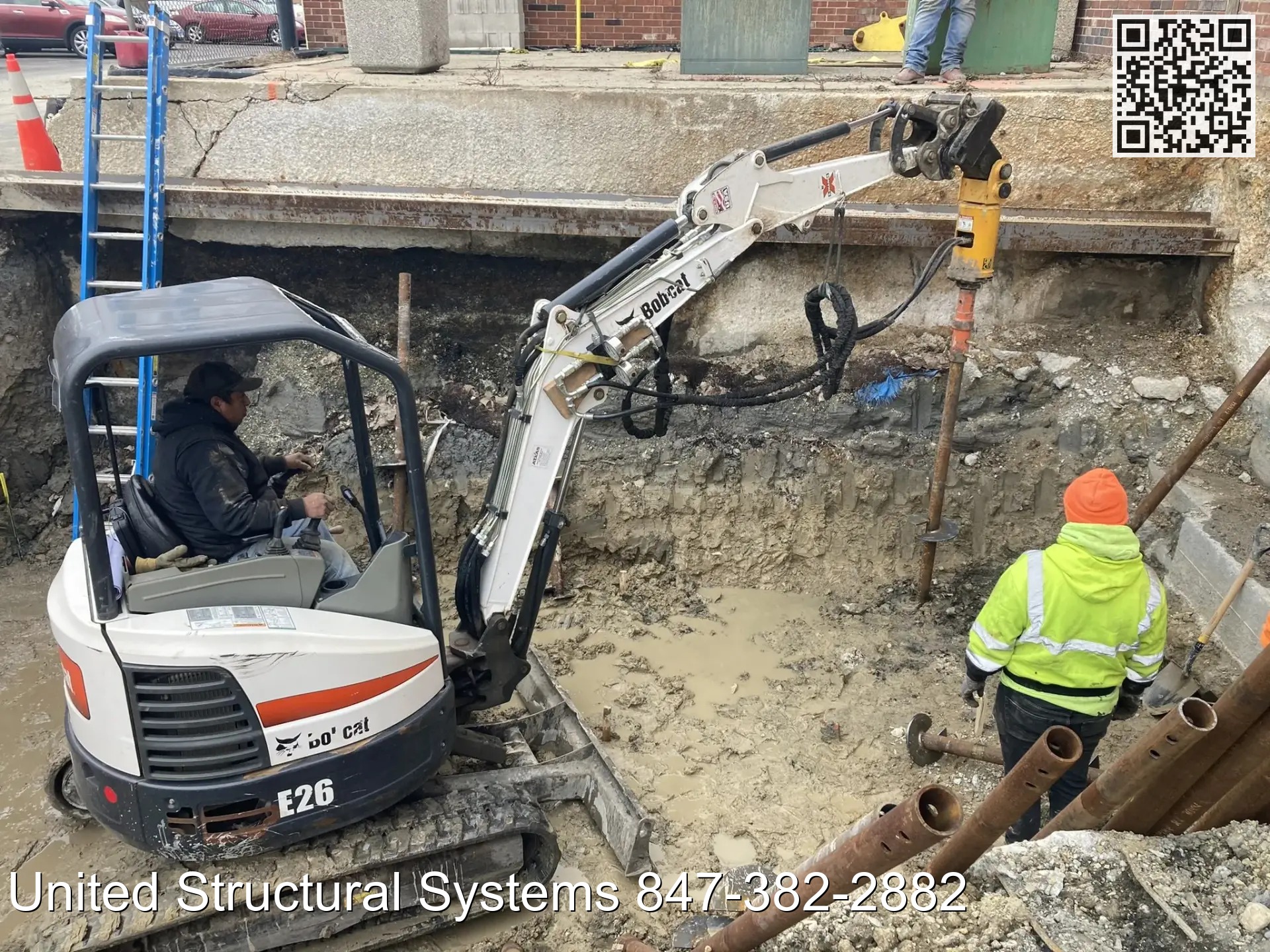
For commercial helical tieback anchor installation, the resource is a gas drive directly a digger or skid guide. Our team track installment torque in real time. The correlation in between ultimate setup twist and pullout ability has actually been actually confirmed throughout 1000s of anchors. I usually use a torque correlation aspect in between 8 and also 12 ft-lb per kip of capacity for standard shaft dimensions, after that confirm with site-specific proof exams. If the dirt is silty along with adjustable dampness, I tighten the connection variation as well as bank on verification tests.
Helical tiebacks avoid spoils, which matters for city internet sites along with infected filler. The coil layers bear in seasoned layers. If a singular helix sees lower-than-expected twist, our company incorporate layers, readjust spacing, or chase intensity to better strata. Helical tiebacks succeed for wall surfaces up to regarding 25 to 30 feets where connection lengths would certainly or else obtain long. For taller wall surfaces, they still operate, however installation twist can obtain high, and also bar measurements require to store that tension without distorting throughout installment. Pairing them with helical piles that sustain upright bunches generates a specific unit for industrial structure stabilization.
Grouted supports: the workhorse for elevation and water
Grouted tiebacks stay my default when preserved heights develop, when groundwater makes complex exploration, or even when the concept asks for a lengthy totally free length for dirt clearances and residential property line geometry. Their capacity relies on grout-to-ground connect, which is a functionality of dirt type and also tension grouting. Traditional supreme connection tensions vary roughly coming from twenty to 60 psi in sands and also silts as well as 80 to 200 psi in proficient clays and weather-beaten stone, yet I hardly ever settle style values without preproduction tests.
The experience of the borehole and the quality of cement placement specified the roof on capability. Double-grouting or post-grouting along with packers may materially improve bond. In sands with infiltration, I over-ream slightly or make use of studying to stop sloughing. In urban work where the support easement is limited, a small-diameter, high-capacity grouted light bulb can easily resolve geometry issues that helical tiebacks cannot.
Micropiles as tiebacks when geometry demands
Micropiles, usually referred to as small stacks or even protection piles when utilized for squeezing, can be put in on a concoction and also used as pressure aspects. This choice shows up when support easements carry out certainly not exist and also our company need to maintain the embedment under our property, or when impediments avoid horizontal boring. The installation obtains from commercial micro pile installation methods: rotary percussion via filler, heavy housing to rejection, after that stone socket if needed. You receive the flexibility of a tiny impact and appropriate tension capacity along with great deterioration outlining, which helps in permanent structural foundation repair.
Working load, evidence lots, and factor of safety
I different style into 2 alongside monitors: structural protection of the anchor tendon and also geotechnical protection of the bond. For long-term anchors, an element of security of concerning 2 on geotechnical protection at the service tasks at hand prevails. Verification tests generally head to 1.25 to 1.5 opportunities the concept bunch to validate lock-off habits as well as creep. On construction websites where previous data are actually thin, I insist on sacrificial confirmation exams at 1.5 to 2 opportunities the layout load to verify connect stress and anxiety presumptions before production.
Load Hop over to this website actions issue. For grouted anchors, hold opportunities at each measure assistance show creep. A typical hold is 10 minutes at 133 percent of concept tons during the course of verification testing. In delicate clay-baseds, I extend holds as well as enjoy variation prices. If gauged creep surpasses standards, I raise connection size or even lessen workload every anchor rather than betting on an additional grouting pass.
Anchor scalp format and spacing
Anchor spacing harmonies wall structure bending, anchor team effectiveness, and web site restrictions. Along the wall, a three-to-six-foot spacing is actually typical, secured where additional charge concentrates. Up and down, I typically stun rows to decrease splitting of ground blocks and also to very clear electricals. With soldier stack as well as lagging, I align the very first row approximately one-third below leading of wall surface, however the final stance adheres to a bending second diagram and constructability access. For cantilevered sectors during the course of presented digging, the 1st row performs massive training. If the schedule compels our company to leave a cut skin in need of support for times, I will bias the first row to obstruct that threat sooner.
The head connection information set the mood for servicing. Hot-dip galvanized bearing plates with ball-shaped washers to fit imbalance are economical insurance policy. In acrid soils, duplex finishes and also encapsulation around the head keep oxygen as well as chlorides away. If the wall is actually building concrete, hollows and cement pads conceal components without sacrificing inspection access.
Corrosion as well as service life
Permanent industrial preserving frameworks typically target a 75-year service life, sometimes 100 for public customers. Oxidation defense grading must reflect that. For helical tiebacks, I point out hot-dip priming as well as, for hostile websites, extra epoxy or even plastic sleeves along the totally free span. For grouted anchors, double rust security is the specification for long-term job: epoxy-coated or galvanized tendon, buttered and also encased totally free size, and also top quality grout encapsulating the connection region. Water drainage responsible for the wall structure does a lot more for lasting performance than any sort of coating. Put in weeps or a collector drainpipe to always keep hydrostatic tension off the unit and also to reduce rust drivers.
If a dirt report flags higher sulfates, I require sulfate-resistant concrete as well as display cement mix water premium. For marine or even deicing sodium exposure, sacrificial steel fullness can be included in the style. I chronicle expectations in the O&M deal therefore future developers recognize what was tallied as propitiatory and what was protected.
Retained elevation, surcharges, and actual live loads
Design manuals reveal easy trapezoids for side stress. Actual sites provide you forklift church aisles, piled pallets that come and go, as well as technical displays at roofing amounts that send unforeseen drive. On one strategies amenities in the Midwest, a 20-foot wall structure worked with paper with an uniform 250 psf surcharge. During development our team learned the customer wanted to stage precast doors on the higher pad. That brief piling imitated a 900 psf live additional charge. Our team changed support space, upsized a number of support rows, and also adjusted wall structure steel. That was avoidable with a better very early conversation.
I now ask blunt concerns: what is actually the heaviest point that will ever rest within 10 feet of the wall structure, also for a day? Will a crane walk that edge during resident remodelings? If future launching is plausible, I catch it either as a rare-event inspection or as part of the base style if it is actually most likely to recur. The cost of including a few additional anchors throughout building is actually moderate contrasted to a retrofit after the occupant moves in.
Staged excavation and also building and construction sequencing
Tieback anchors do certainly not reside in isolation. They use while earth relocations and shoring stands in brief conditions. If you are actually taking care of a cut along with soldier heaps and also lagging, the sequence controls movement. Dig deep into in airlifts of three to 5 feet, mount lagging, drill and set up the 1st tieback line, verification exam, latch off, at that point move to the following lift. Do certainly not chase creation by receiving pair of airlifts in advance of a test plan unless you appreciate straightening stooped piles.
For grouted supports, grout has to heal prior to full lock-off. If the routine is tight, team up a greater early-strength mix and a reasonable proof-test schedule. In winter months, give heat energy and hoarding for cement pipes and also scalp screening. For helical tiebacks, creation may surge, which tempts service providers to outpace the examination team. Designate a watchman to phone twist and also log intensity in real time. Photographes and also torque logs conserve debates later.
Testing ideology that keeps jobs honest
Reliance on estimations without testing is a wager versus variability. I put together 3 layers of verification:
- Preproduction propitiatory load exams to legitimize concept connection tension or torque correlations, one exam for each vital soil stratum. If the internet site has pair of specific enduring zones, I test both. Proof tests on a fraction of creation supports, frequently one hundred percent for the 1st row and also 10 to 20 per-cent afterwards, readjusted based upon performance. Performance surveillance of the wall structure throughout building, with study points or inclinometers for taller wall surfaces or even where surrounding establishments are actually sensitive.
Creep criteria must be actually very clear in the standards. A typical acceptance is actually less than 0.04 inches in the final one-minute grip throughout evidence testing at 133 per-cent of concept bunch, but I readjust through job. If a helical tieback presents a reasonable up creep style yet passes total activity, I cross-check the soil layer as well as think about incorporating an additional helix or chasing after a denser coating rather than allowing marginal performance.
Property pipes, electricals, as well as lawful easements
Anchors intercross residential property lines unless you plan for them. Attorneys enter into the layout if the support bulb trespasses. On dense web sites, I first map power passages, hurricane pipes, and easement restraints. If the tiebacks must stay on our edge, battered micropiles or short bonded areas with higher tension grouting aid. When the easement permits crossing, I always keep a minimal open space to existing energies and accurately document as-built azimuth and look for future excavations. Concrete coring sleeves at power crossings incorporate a level of protection when the wall acquires potential penetrations.
Serviceability: keeping wall surfaces directly and tenants happy
Even when strength checks crystal clear, utility regulates how the wall surface experiences. Renters see a top-of-wall deflection of half an in on a 20-foot wall structure if it makes handrails swing. Confining curvatures to around 0.5 to 0.75 inches at the top commonly always keeps walls aesthetically true. Tiebacks that are also couple of and extremely jam-packed produce a sawtooth deflection design in between heaps. Much more supports at reduced lots refine the deflection arc and also decrease bending in walers or even soldier shafts. That might appear like excessive in a spreadsheet, but it spends for on its own in calmer appearances and also fewer service warranty calls.
Choosing between helical, grouted, and hybrid systems
No solitary anchor style handles every business retaining issue. I make use of a straightforward mental matrix that makes up soil, accessibility, schedule, and functionality:
- Clean sands or even tense residues with minimal groundwater and tight job windows prefer helical tieback anchor setup. You get prompt capability verification with twist, reduced spoils, and also quiet operations. Mixed packs, higher groundwater, or even long complimentary lengths press me toward grouted supports. Tension grouting locates gaps and constructs strong connect regions behind the breakdown surface. Sites without any anchor easements, hefty blockages, or even severe geometry at times ask for battered micropiles as tiebacks or a hybrid: helical tiebacks in one area, grouted supports where grasp and connect are actually critical.
Commercial resistance pile setup as well as commercial helical pile installation turned up in the same respiration when the wall surface likewise needs vertical support at a grade shaft or even when deriving becomes part of the range. That coordination can easily save uses and also take uniformity to screening, examination, as well as components across deep foundation repair as well as tieback work.
Detailing for sturdiness, assessment, as well as repair
I wish a support that could be evaluated, retensioned if required, and left alone many of its own life. That results in information like obtainable bearing plates, easily removable cover layers, and also drain roads that maintain crowns completely dry. For irreversible helical tiebacks, point out corrosion-protected couplers as well as secured limits. For grouted anchors, epoxy encapsulation around the head integrated along with weeps decreases microclimates that eat steel.
Where foundation crack repair seems in adjoining frameworks, I search for origin in wall surface action. At times a crack in a slab on the higher pad banners tieback relaxation or water tension behind the wall surface. Having documented lock-off loads and a monitoring baseline gives the crew a swift way to separate structural foundation repair needs to have coming from aesthetic fixes.
Cost, routine, and what shocks you on site
Budget owners desire a single variety every support. The truth is actually a variety up until screening begins. Helical tiebacks generally provide cost surety previously since twist correlates directly. Grouted supports lug more consumables as well as more effort, yet they may provide greater capabilities per anchor, which might decrease the count. Micropiles as tiebacks usually tend to become the superior option however unlock internet sites that will typically stall.
The largest schedule deadlies are actually powers that were certainly not where the study pointed out, water showing up in a lift you thought was completely dry, as well as testing hold-ups. I prewire delegations for alternative support types so we may pivot if soils come in looser than the borings suggested. That adaptability, plus a pre-negotiated unit cost for extra bond duration or additional coils, always keeps the work moving.
An industry instance that connects it together
On a distribution center development in Pennsylvania, the design called for a 28-foot cut for a new lower filling dock. The upper yard lugged forklifts as well as weekly container stacking. Borings presented 5 to eight feet of fill, underlain by glacial till along with a perched water level after rainfall occasions. Residential or commercial property restrictions left behind merely a slender anchor easement.
We modeled the planet pressures at limited-yield given that the building criteria permitted merely moderate wall surface motion. A crossbreed service emerged. The leading two rows used helical tiebacks, set up rapidly to catch the schedule home window, along with torque connection verified through preproduction load examinations. The lesser row, which required a longer free of cost duration to surpass the potential failure surface area as well as to appreciate the easement, shifted to grouted anchors with post-grouting to build bond in the till. Walers got load redistribution in the course of organized digging, and the workers maintained digging one lift behind testing.
During a wet full week, the perched aquifer soared, and cement returns received messy. The service provider switched over to short covering parts as well as a thicker cement mix, which maintained bores. Verification exams hit 140 per-cent of layout load along with creep easily listed below criteria. The wall structure peaked straight, and also a year later on the servicing staff disclosed dry out support scalps and also no settlement along the top edge. That end result pivoted much less on an ingenious formula and even more on practical choices under web site constraints.
Where tiebacks meet more comprehensive structure work
Commercial structure repair service frequently shows up as a bunch. A retaining wall structure needs to have tiebacks while the adjoining piece reveals action, or even a building growth calls for both lateral and upright support. Helical piles and also protection heaps take vertical lots. Helical tiebacks as well as grouted supports take sidewise thrust. Micropiles deal with tricky soils or clearance-limited rooms for each. Coordinating these bodies along with one installer decreases interfaces as well as offers you a single testing regime. It additionally responds to the inescapable concern when an owner talks to whether deep foundation repair and also support job may discuss mobilization and management. Yes, and also it generally saves weeks.
Practical checks prior to you launch drawings
If you desire a fast, high-value swing that captures very most troubles, operate this quick guidelines just before you brand:
- Does each tieback's free of charge span definite the absolute most important breakdown area through a reasonable balanced out, chronicled in the calc set? Are workload aligned with a test plan that features at the very least one sacrificial verification examination in every unique bearing stratum? Have you sized corrosion defense and also recorded life span expectations, consisting of cement type, finishings, and also water drainage paths? Do anchor angles, spacings, and also easements crystal clear electricals and also residential property lines along with space for development tolerances? Is certainly there a tracking prepare for wall structure activity as well as a feedback protocol if deflections go beyond trigger values?
If those five things are actually solid, the rest tends to come under place.
Final notions coming from the field
Tieback anchors prosper when the concept values soil irregularity, always keeps screening central, and also leaves room for construction fact. The mathematics issues, yet thus perform twist logs, grout gains, as well as the judgment to transform course when a restriction curve theoretically does not match the slice skin you find. Commercial helical tieback anchor installation, grouted supports, and also micropiles each have lanes where they beam. Utilize all of them as portion of a single unit that stabilizes capability, sturdiness, and use, as well as your maintaining constructs are going to silently perform their task while whatever around all of them acquires constructed, filled, and also reloaded for years.